
Foundation repair signs are easy to miss — until they’re not. Most foundation problems start small and develop gradually over months or years, which means many Knoxville homeowners don’t realise they have a serious issue until the damage is already significant. Knowing what to look for early can save thousands of dollars and prevent a manageable repair from becoming a major structural project.
Why Knoxville Homes Are Particularly Vulnerable
East Tennessee’s geology is hard on foundations. The region’s clay-heavy soils absorb water and expand significantly during wet seasons, then shrink back during dry periods. This constant expansion and contraction exerts lateral and vertical pressure on foundation walls and footings year after year. Combined with Knoxville’s hilly terrain and seasonal rainfall, the conditions that cause foundation movement are present in almost every neighbourhood across Knox County.
Warning Signs Your Foundation Needs Attention
Cracks in Interior Walls
Hairline cracks in drywall are common in any home and are often caused by normal settling or humidity changes. But cracks that are wide, growing, diagonal, or appearing in multiple locations at once are a different matter. Cracks radiating from the corners of doors and windows are particularly telling — they indicate the frame is moving, which means the foundation beneath it is too.
Cracks in Exterior Brick or Masonry
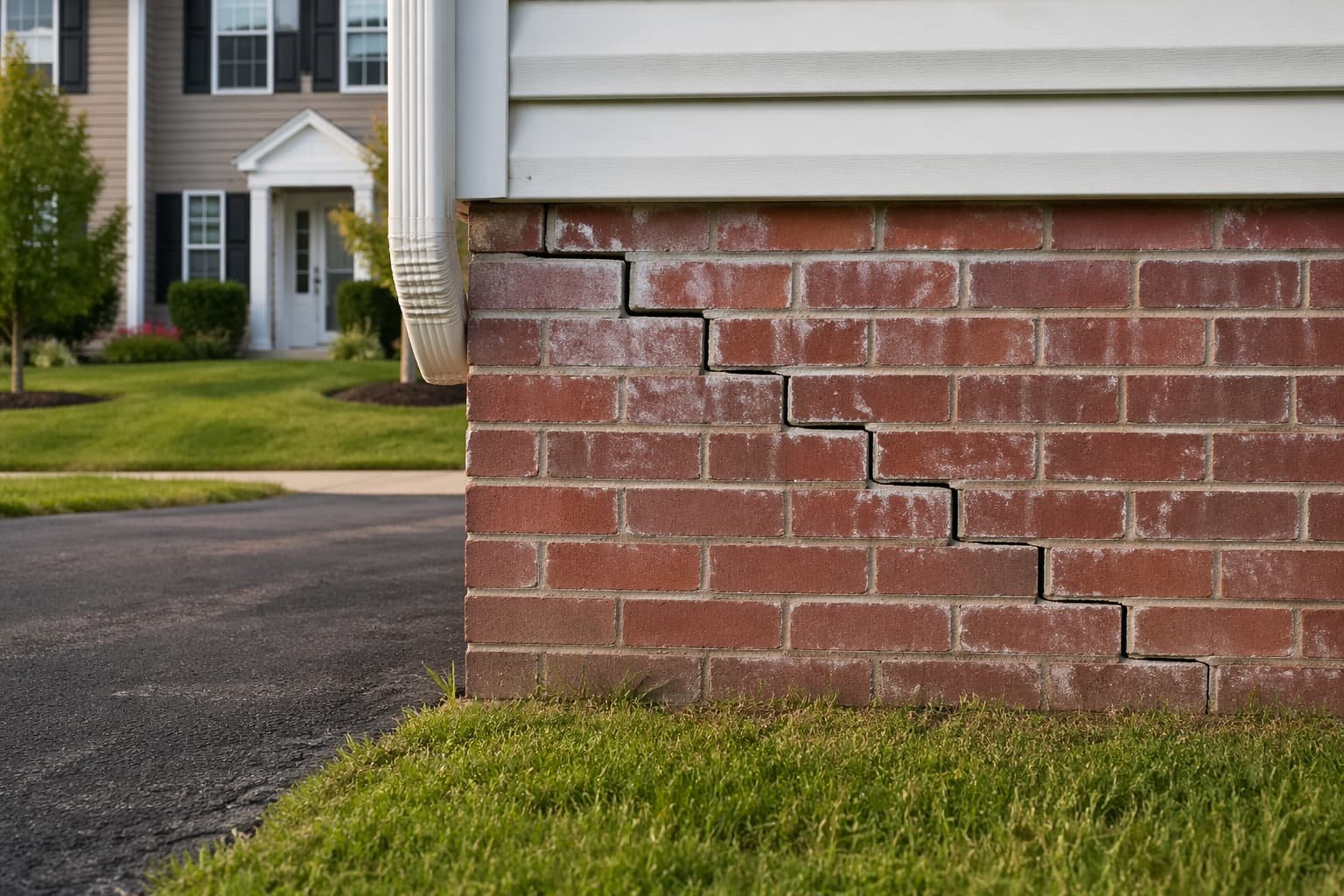
Stair-step cracks running diagonally through brick or block mortar joints are one of the clearest external signs of foundation movement. These cracks follow the mortar lines because that’s the path of least resistance as the foundation shifts. They’re common in older Knoxville homes and should always be professionally assessed.
Doors and Windows That Stick or Won’t Close
If doors or windows that previously operated smoothly have started sticking, binding, or leaving visible gaps at the top or sides of the frame, the frames themselves are likely racking — being pushed out of square by foundation movement. This is one of the most reliable early indicators that something is changing beneath the structure.
Uneven or Sloping Floors
Floors that feel springy, bouncy, or noticeably sloped are worth investigating. While some slope in older homes is normal, progressive floor movement — particularly in one area of the house — can indicate differential foundation settlement. A marble test (placing a marble on the floor and watching it roll) is a simple way to check for slope.
Gaps Between Walls and Ceilings or Floors
Separation between interior walls and the ceiling or floor above and below them indicates the structure is moving in different directions. This kind of gap is not a cosmetic issue — it reflects real structural movement that needs investigation.
Bowing or Leaning Basement Walls
This is one of the most serious foundation warning signs. If you can see or feel that a basement wall is curving inward, leaning, or has developed a horizontal crack across its mid-section, soil pressure is actively pushing against the wall. This type of damage accelerates — the wall will not stop moving on its own. Professional assessment is urgent.
Water in the Basement
Water seeping through basement walls or pooling on the basement floor after rain is a sign of foundation failure. Cracks and gaps in the foundation wall allow hydrostatic pressure from saturated soil to push water through. Left unaddressed, persistent water intrusion leads to mold, structural deterioration, and worsening cracks.
Chimney Separation or Leaning
A chimney that is visibly pulling away from the house or leaning to one side indicates the footing beneath it has settled independently from the main foundation. This is common in older Knoxville homes where chimneys were built on separate shallow footings.
What to Do If You Spot These Signs
Don’t wait and hope the problem resolves itself — foundation issues don’t improve without intervention. The right first step is a professional on-site assessment. A qualified foundation specialist will identify the cause of the problem, assess whether it is active or historic, and recommend the appropriate repair.
Be cautious of assessments that jump straight to the most expensive solution without explaining the diagnosis. A good assessment should tell you what is causing the problem, not just what the repair will cost.
How Quickly Do Foundation Problems Get Worse?
It depends on the cause and the conditions. Bowing basement walls under active soil pressure can progress measurably season to season. Cracks that allow water entry tend to widen as freeze-thaw cycles work on the concrete over winter. Settlement driven by ongoing soil movement continues until the movement stabilises or is stopped by repair. There is no safe assumption that a foundation problem is not getting worse — only an assessment can tell you that.
Get a Free Foundation Assessment in Knoxville
If you’re seeing any of the signs described above, Foundation Knoxville provides free, no-obligation assessments for homeowners across Knoxville, Maryville, Oak Ridge, Farragut, Powell, Lenoir City, and Sevierville. We’ll tell you exactly what we find and what — if anything — needs to be done. No pressure, no upsell. Call us at (865) 324-5511 or fill out our free estimate form today.